
At some point in your twenties — and I say twenties advisedly, because that was the decade most of us did our imagining with the most fervour — you composed, perhaps without quite realising you were composing it, a mental image of what your eventual happy life would look like. There was, in all likelihood, a kitchen in the image. There was probably someone in the kitchen with you. There was a quality of having arrived, of having at last put down the long uphill task of becoming, and being permitted, finally, to live. It was a very specific picture, even if you would have struggled to articulate it in detail; and it has been, in the quieter chambers of the mind, the unspoken benchmark against which the actual life has been measured ever since.
You may have, by this point, achieved several of the items on that imagined list — the kitchen, the partner, the work, the small reliable pleasures of an organised existence; and yet, on a perfectly ordinary Tuesday evening, washing up alone for a moment while the rest of the house is occupied elsewhere, you have noticed something quietly disquieting. You are not, in any reliable or sustained sense, the happy person you had assumed the achievements would automatically make you. You are, broadly, content; you are sometimes glad; you are also, often, restless without warning, sometimes sad for no reason that an honest investigation can identify. The static picture of happiness has not, somehow, arrived to take up residence in your life — despite the life, by every visible measure, matching the picture rather closely.
Why does the picture not deliver the promised feeling? Because happiness, it turns out — and this is something almost no one warns us of in advance — was never a thing one could simply hang on a wall and admire. It was never a still life. It was, all along, a kind of weather. It moves; it passes through; it settles for an afternoon and then, very gently and entirely without explanation, gets up and leaves, and quite a different feeling sits down in its place. We were sold an image of happiness as architecture — solid, achieved, occupied — and it turns out to be more like climate, which one can prepare for and adjust to but cannot, in any final sense, possess.
Are you, perhaps, a little disappointed by climate? Most of us are. We had hoped, after all, for architecture; we had hoped, having built the right house, to live inside the happy house indefinitely. We were not told that the house would also contain afternoons of unaccountable restlessness, evenings of unexplained grief, mornings on which the very same kitchen we had longed for would feel curiously empty in spite of everything in it being exactly as we had wished. We were not told that joy would arrive in much smaller doses than we had imagined, and from much stranger sources, and on no fixed schedule whatsoever.
What has happiness actually looked like, if you sit with the question honestly, in your real life? You may find — and I would not labour this if I had not noticed it so often in myself and in others — that the happiest moments you can recall are not, in fact, the ones you had planned for. They are smaller; they are odder; they are the unexpected ten minutes on a foreign bench when nothing in particular was happening; the moment of helpless laughter in the kitchen with a friend over something genuinely silly; the morning when the light came through a particular window at a particular angle, and you noticed, and you put down the thing you were doing, and you stood, for once, and let the moment have you for as long as it cared to stay.
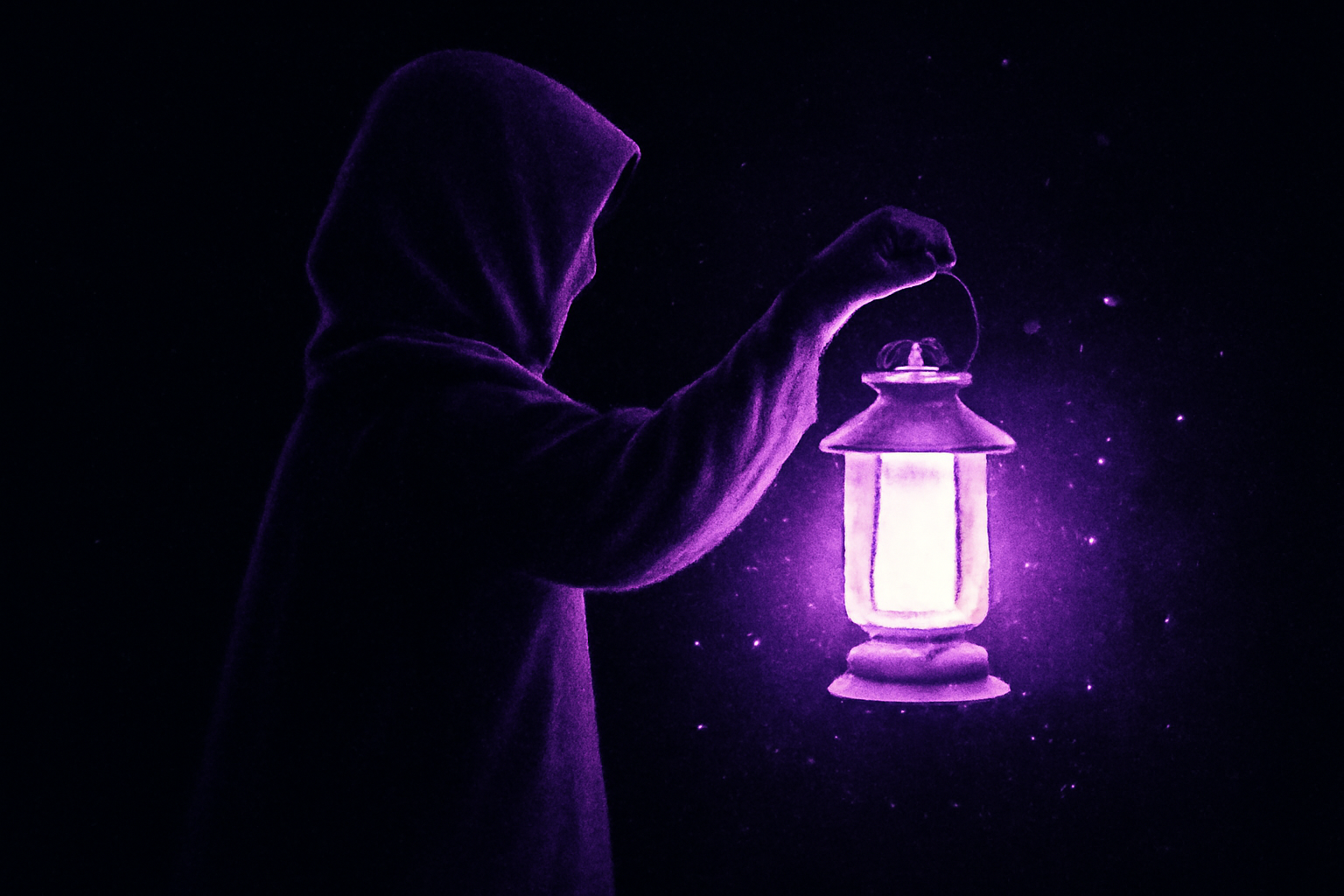
When did you last let a moment have you? We have built whole adult lives in which the moments are rarely allowed to have us at all — we pass through them, generally, with our attention elsewhere; we are doing one thing while thinking about the next; we are getting through the morning to get to the afternoon to get to the evening to get to bed to get to tomorrow. The journey itself has become, somewhere along the way, a corridor we are hurrying down, towards a happy room we believe is waiting at the end of it. What if — and I want to ask this carefully, because the question is genuinely vertiginous — there is no happy room at the end of the corridor? What if the corridor itself is, in fact, the life?
This is, perhaps, the great reorientation that the second half of life invites us into — to stop running down the corridor in search of arrival, and to begin, instead, to live inside the corridor as one finds it. To notice, on the way, the strange small pleasures of the corridor itself: the texture of the carpet, the particular way the light falls between the doors, the companions one has had the unexpected fortune to be walking with, the conversations that took place in passing, the way the corridor has, in places, its own beauty, which one had been too busy looking ahead to see.
How might the day actually feel, if you slowed your pace inside it — not by abandoning your responsibilities, nor by retreating into anything monastic, but simply by taking your tea standing at the window for a minute longer than you were going to, by letting the dog have a slower walk, by listening to the end of the song in the car rather than switching it off the moment you have parked? Happiness, it turns out, is generated by attention much more than by acquisition; it is a quality of presence to the moment one is actually in. It is, in this sense, almost never available in the future, because the future is by definition a place where one is not yet, and which one cannot, by the laws of consciousness, be present to. Happiness can only ever arrive now. And the now is small, and the now requires us to look up.
Will you look up?
There is, of course, also the rather harder question of what to do with unhappiness, since unhappiness, like its sibling, is part of the weather, and we will not be exempted from it. You will be unhappy on some Tuesdays for reasons you can name, and on others for reasons you cannot, and you will, periodically, fall into a melancholy that lasts a week and lifts of its own accord and leaves you, on the far side of it, a little wiser. This is not a failure of the life you have built. It is, in the end, simply weather. Could you let the weather be weather? We have been taught — by the optimisation industries especially — to read every dip in mood as evidence that something is wrong and must be repaired; we have been taught to manage our own moods as if they were quarterly figures; and the mood does not, in my experience, generally cooperate with that style of management. The mood is older and wilder than the calendar; the mood comes in, stays a while, and goes again; and the most useful thing we can do is to be rather less alarmed by its rhythms than we have been.
You are not, in the final reckoning, supposed to be happy all the time; you are supposed to be alive — and aliveness, by its very nature, includes weather; aliveness includes the morning when, for no reason you can identify, your eyes fill at a song on the radio; aliveness includes the afternoon when, equally without reason, the day feels suddenly luminous. Both are gifts. Both are passing. The only skill — and it is a real skill, and it can be cultivated patiently — is to stop demanding that the bright weather stay forever. What if the journey, including its weather, is, in fact, the destination? It is, I am increasingly persuaded, the only destination that was ever genuinely on offer; and it is, if we will let it be, more than enough.
Written with intention by
The Pilgrim