
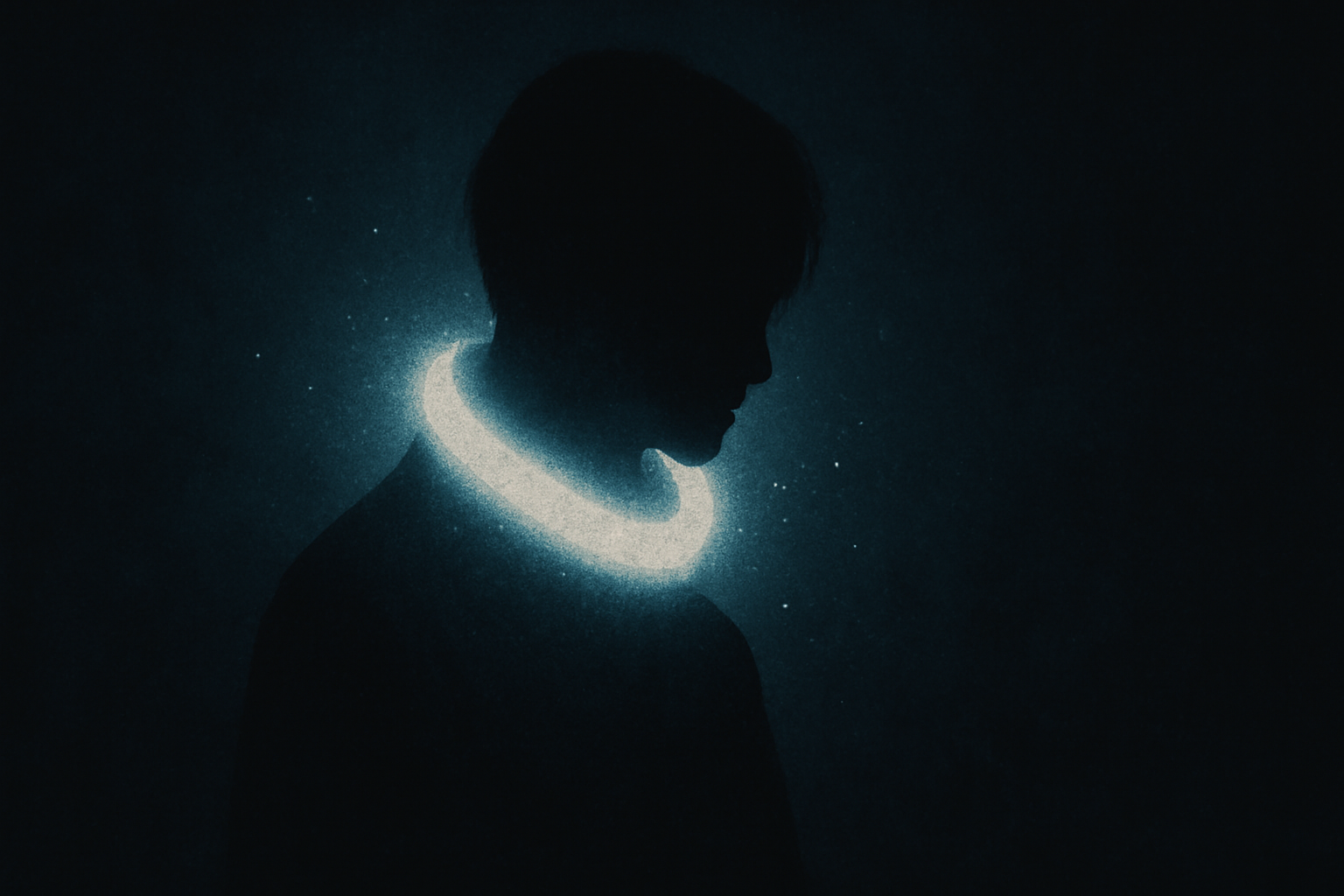
You used to feel things more sharply. There was a time when the news could make you weep, when a friend's crisis would keep you awake at night, when injustice felt like a stone in your chest. But somewhere along the way, something shifted. The outrage dulled. The tears stopped coming. Now, when someone tells you about their struggles, you find yourself nodding along while your mind drifts to what you need from the shop. You register their pain the way you register background noise—present but not penetrating. And the strangest part? The relief.
Because caring hurts. It demands something from you that you are not certain you have to give. Every opened heart is a door through which the world's mess can enter, and you have enough mess of your own. When you stop caring, you stop carrying. The weight lifts. You move through your days with a kind of smooth efficiency, ticking off tasks, answering messages with the appropriate emoji, showing up where you are supposed to show up. You are functional. You are fine. You are also, if you are honest with yourself in the quiet moments, a little bit hollow.
Apathy arrives not as a dramatic surrender but as a slow withdrawal, like the tide going out so gradually you do not notice until you are standing on dry sand. It makes perfect sense when you think about it. You have been disappointed before. You have invested yourself in people who did not reciprocate, in causes that went nowhere, in hopes that dissolved like sugar in rain. Why keep touching the hot stove? Why keep offering your heart to a world that seems determined to break it? Apathy is not laziness or cruelty—it is self-protection dressed in sensible clothes. It is the psyche's way of saying: enough. We need to conserve what little we have left.
And it works, for a while. You avoid the sting of fresh grief by refusing to let anything matter too much. You sidestep the exhaustion of empathy by treating other people's problems as their own to solve. You protect yourself from the paralysis of caring about everything by caring about nothing in particular. It is a kind of anaesthesia, and anaesthesia has its place. But what happens when the numbness that was meant to spare you from pain also numbs you to beauty, to connection, to the very things that make life feel worth living?
You start to notice it in small ways. A friend shares something vulnerable and you hear yourself offering a platitude that means nothing. You scroll past news of atrocity with the same mild interest you give to celebrity gossip. Your partner asks what you want—for dinner, for the weekend, for your future—and you genuinely cannot summon a preference. The question itself feels exhausting. Wanting requires caring, and caring requires energy you are not sure you possess. So you shrug. You say it does not matter. And you mean it.
The insidious thing about apathy is that it feels like wisdom. It feels like you have finally learnt not to be so foolishly earnest, so naively invested. You congratulate yourself on being realistic, on having healthy detachment, on not being one of those people who gets worked up over things they cannot change. But beneath the rationalisations, something quieter is happening. You are disappearing. Not dramatically, not all at once, but in the small daily choices to not engage, to not respond, to not let yourself be moved. You are becoming a person who is present but not available, alive but not living.
What does it cost you? It costs you intimacy, for one thing. Because real connection requires showing up with your full self, with your capacity to be affected by another person's reality. When you meet vulnerability with blankness, when you greet someone's joy or sorrow with the same flat affect, you tell them without words that they do not matter enough to disturb your equilibrium. And they feel it. They stop bringing you their true selves. They learn to keep their distance from the distance you radiate.
It costs you meaning, too. The things that give life texture and purpose—creative pursuits, relationships, work that feels significant—all demand that you care enough to invest yourself. Apathy treats everything as interchangeable, as equally unimportant, and in doing so flattens the landscape of your life into a featureless plain. Nothing stands out. Nothing calls to you. You wake up and go through the motions and wake up again, and the days blur together because you have stopped distinguishing between what matters and what does not.
And perhaps most painfully, it costs you yourself. Because you are not meant to be neutral. You are a creature of longing and aversion, of preferences and passions, of things that delight you and things that enrage you. When you anaesthetise all of that in the name of self-protection, you lose access to the parts of yourself that are most alive. You become a curator of your own emptiness, carefully maintaining the nothing where something used to be.
But here is what apathy does not tell you: the alternative to caring is not freedom. It is just a different kind of prison. The one where you are safe from heartbreak but also from love. Where you avoid disappointment but also wonder. Where you protect yourself so thoroughly that there is no self left to protect.
What if the question is not whether you can afford to care, but whether you can afford not to? What if the very thing that feels too costly—letting yourself be moved, letting things matter, letting your heart break open again—is the only thing that can return you to life? Not the careful, managed life you have constructed, but the wilder, riskier one where you are subject to beauty and pain in equal measure, where you are awake enough to be hurt and therefore awake enough to be whole. What would it mean to let one small thing matter again, just to see what happens?
Written with intention by
The Pilgrim